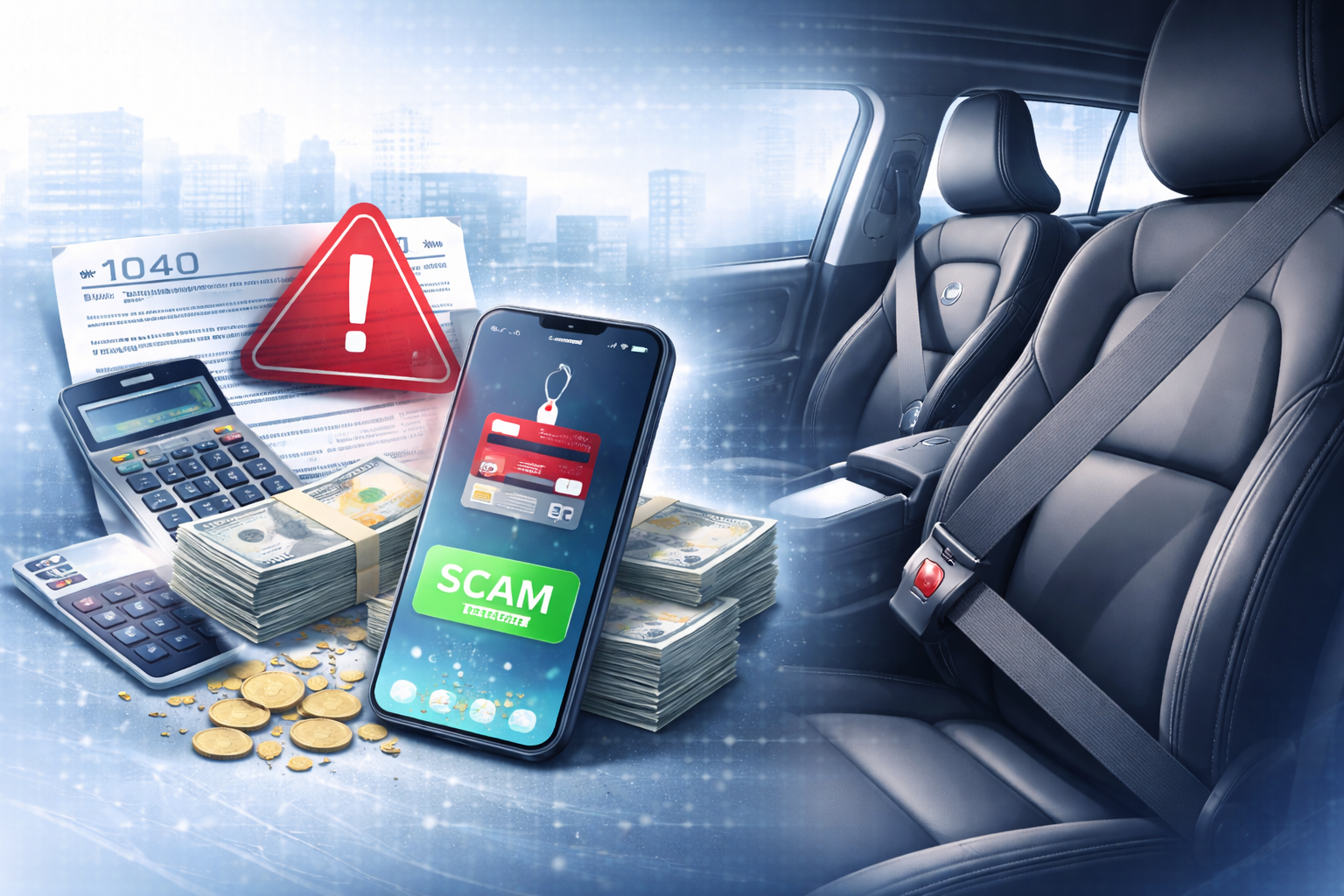
This is a blog post about tax scams (spoiler alert: They’re more convincing and prevalent than ever before), but before actually discussing tax scams, I first want to walk us through a brief history of automative safety.
The three-point seatbelt
In 1959, a Volvo engineer named Nils Bohlin invented the modern three-point seatbelt. Volvo shared the patent with any who wanted it at no cost.
Nearly seven decades and an estimated 1 million saved lives later, most of us now instinctively buckle up every time we enter a vehicle. Motor vehicle fatalities per 10,000 cars on the road have declined by more than a factor of three since the introduction of the seatbelt, from 5.26 in 1959 to 1.57 in 2023.
But in the 1960s, many resisted this added safety measure. Some automakers bristled at the implication their cars were not inherently safe. Drivers argued seatbelts were uncomfortable and clunky.
Good drivers don’t need seatbelts!
Seatbelts are uncomfortable!
It slows me down when I have to buckle up!
In 2026, we’re essentially having the same debate in banking.
APP fraud
Authorized push payment (APP) scams account for billions of dollars in global losses every year. Just like driving, it’s the customer who technically hits the gas and authorizes the transaction. Critics still insist scam victims should’ve known better and should bear all responsibility for their losses.
Intervention creates friction!
They pressed send. They alone are liable.
Consumer education campaigns should be enough!
In the U.S., tax fraud and tax-related scams alone cost Americans $9.1 billion in 2024. The scams portion of that is almost certainly underreported, growing every passing year, and destined to reach a new all-time high this spring.
Tax scams
Tax season has always been fertile ground for fraud, but in 2026, the scale, speed, and sophistication of tax-related scams in the United States have exponentially increased to such a degree that federal officials describe tax scams as a threat to national security.
The Internal Revenue Service has issued multiple alerts since January warning of a surge in impersonation schemes, fraudulent refund claims, scam calls, social media scams, and phishing campaigns timed to coincide with peak filing windows. Readily available AI tools allow scammers to improve the personalization, believability, and reach of these attacks.
The rapid evolution of these scams mirrors a pattern we’re seeing across all scam types: As digital tools, technologies, and systems accelerate, so do the criminal tactics designed to exploit them.
Faster refunds, faster payments, and faster filing processes may create efficiency for taxpayers, but they also create opportunities for criminals who understand how to weaponize urgency and automation.
Volvo knew best
Volvo understood something primal and essential when it introduced the first seatbelt: Humans behave differently under pressure.
In high‑stress moments, we don’t think. There’s no time. We rely on instinct, muscle memory, fight or flight. Scammers know this better than anyone. Their scripts lean heavily on urgency, fear, authority, and opportunity.
In a recent piece for our Dark Economy project, Bentley University Law Professor Steven Weisman said of scammers: “[They] have a knowledge of psychology that Freud would have envied. They’re able to create emergency situations that appeal to a part of our brain call the amygdala that developed early to make snap decisions.”
The comparison here isn’t that tax scams somehow resemble car accidents, but both do expose the limits of expecting perfect human behavior in high-pressure situations. The three‑point seatbelt was revolutionary not because it prevented more accidents but because it reduced the fatalities resulting from those accidents. It compensated for predictable human reactions without forcing every driver to drive more slowly.
As real-time payments scale in the U.S., financial institutions have an opportunity to learn from the prescience of Volvo 67 year ago. Intervention is no longer optional. We must adopt methods of intervening that allow consumer protection, user experience, and institutional growth to coexist and not compete with one another.
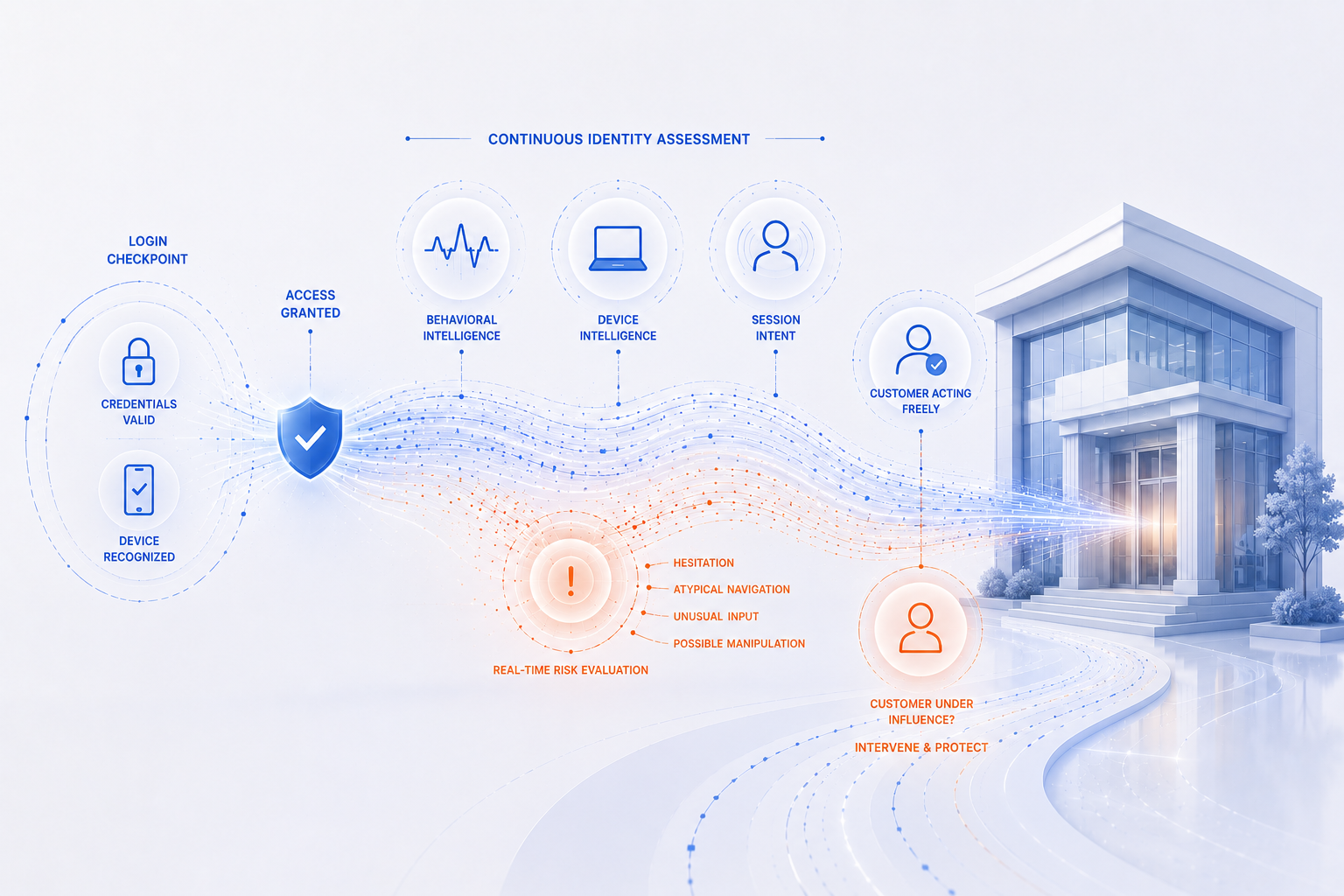
To best protect consumers this tax season (and every subsequent one going forward), financial institutions must increase decision confidence. When banks better understand user behavior in the moment and separate manipulation from legitimate intent, yes, they stop more scams, but, crucially, they also reduce false positives. They avoid unnecessary step-ups. They cut manual reviews and case noise. They prevent friction-driven calls and customer attrition. They create space to confidently approve more legitimate activity.
One day, proactive APP scam intervention in the U.S. will feel as obvious as buckling a seat belt. Right now, we’re still debating whether seat belts are necessary.
Key takeaways:
- Tax scams are surging in scale and sophistication: Driven by AI and digital acceleration, tax-related scams are becoming more personalized, believable, and widespread, contributing to billions in annual losses.
- APP fraud mirrors broader debates on responsibility: Some still argue victims should bear responsibility, despite growing evidence that human behavior under pressure is inherently fallible.
- Scammers exploit human psychology, not just systems: By leveraging urgency, fear, and authority, attackers manipulate instinctive decision-making, making even informed users vulnerable in high-stress moments.
- Faster systems create faster fraud opportunities: Real-time payments, rapid refunds, and streamlined digital processes improve efficiency, but also give criminals the speed and scale needed to succeed.
- Proactive intervention is the path forward: Real-time behavioral insights can help banks prevent scams, reduce friction, and protect customers without compromising experience.
Resources:
- Internal Revenue Service (IRS): IRS Criminal Investigation FY24 Annual Report
- Dark Economy: The golden age of impersonation
- PBS: Tax scams are up this season compared to previous years. Here's what to know
- Reuters: AI-Driven Fraud Risk Heightened for 2026 Filing Season
- IRS: Dirty Dozen tax scams for 2026
- Blog: Undetectable Scams: Deepfakes & AI Change the Game