
Um diesen Blog auf Deutsch zu lesen, klicken Sie hier.
If you ask a member of a fraud team at a German bank (or, honestly, a bank anywhere in the world) to assess their institution’s fraud prevention prowess, chances are good they’ll rate it quite highly. We actually proved this in a recent survey of 100 German banking leaders, almost three-quarters of whom rated their current fraud controls as “effective” or “very effective.”
That confidence clashes a bit with other datapoints from the same survey. Half of German respondents report fraud losses increasing at their institution, while 56% say fraud attempts are also on the rise. Two-thirds of German banking leaders estimate their organization’s annual fraud-related losses exceed $10 million.
Breaking it down
German banks report lower false positive rates than their European counterparts. Nearly half of those surveyed say their false positive rates exceed 40%, compared to 65% across Europe. The Germans also work fraud cases much quicker, with one-third of survey respondents reporting their bank fully investigates cases within one day. Only 18% of European fraud leaders said the same.
Germany is renowned around the world for its efficiency, but we find other datapoints from this survey that suggests fraud management in the country is somewhat stuck in the past. More than of survey respondents (53%) say they review cases manually — greater than the European average of 46%. Only 41% of respondents indicated their organization uses machine-learning models within its fraud stack — the lowest rate across all 11 European countries we surveyed.
The overreliance on manual reviews doesn’t align with what one would expect from an effective fraud operation. Although German bank representatives claim to review one in three cases within a day, it's reasonable to expect machine learning tools could improve this investigative productivity. And that doesn’t consider other advantages offered by machine learning capabilities, which more effectively identifies cases more likely to be fraudulent (and, thus also, more deserving of human review).
Therefore, any reluctance to embrace new technologies and implement changes that can aid fraud detection leads us to question whether inefficiencies are avoidable or whether this important work could be performed with greater efficiency.
Interestingly, 75% of respondents said their organization was considering upgrading its fraud stack. This offers two possibilities:
- Some who claim their controls are efficient may have overestimated that efficiency and deep down recognize improvements are needed.
- Despite things going well, they continue striving to improve performance.
The reality is likely a mix of both.
The truth is that yesterday’s fraud stack is undoubtedly not suitable for battling today’s — and tomorrow’s — fraud. That’s particularly true when it comes to the growing ineffectiveness of manual reviews, which makes these data points encouraging. Unfortunately, only 11% of respondents say their organizations are currently implementing new technologies, suggesting German banks need an extra push to take the next step.
Preparing for an AI-driven future
The first question that comes to mind when thinking about futureproofing a fraud stack: What does the future of fraud look like?
I wish I possessed psychic abilities to answer this question perfectly in the same way I wish I could predict the winning lottery numbers every week. Alas, I don’t, so we’ll have to go off what’s generating the most conversation andconcern within the industry: AI, particularly agentic AI.
It could be yet another buzzword, but executives are looking to incorporate this technology in many different ways. Using AI could open up weaknesses that fraudsters will inevitably pounce on, making it a credible concern we need to watch. Likewise, agentic AI can also be used by fraudsters, creating new opportunities for them to steal more money, more quickly, and more easily than ever before.
When asked about the topic of agentic AI, German fraud leaders overwhelmingly indicated they believe they’re already prepared agentic AI attacks, with almost half (44%) saying they’re fully ready. Once again, we perceive this as confident optimism from bank representatives.
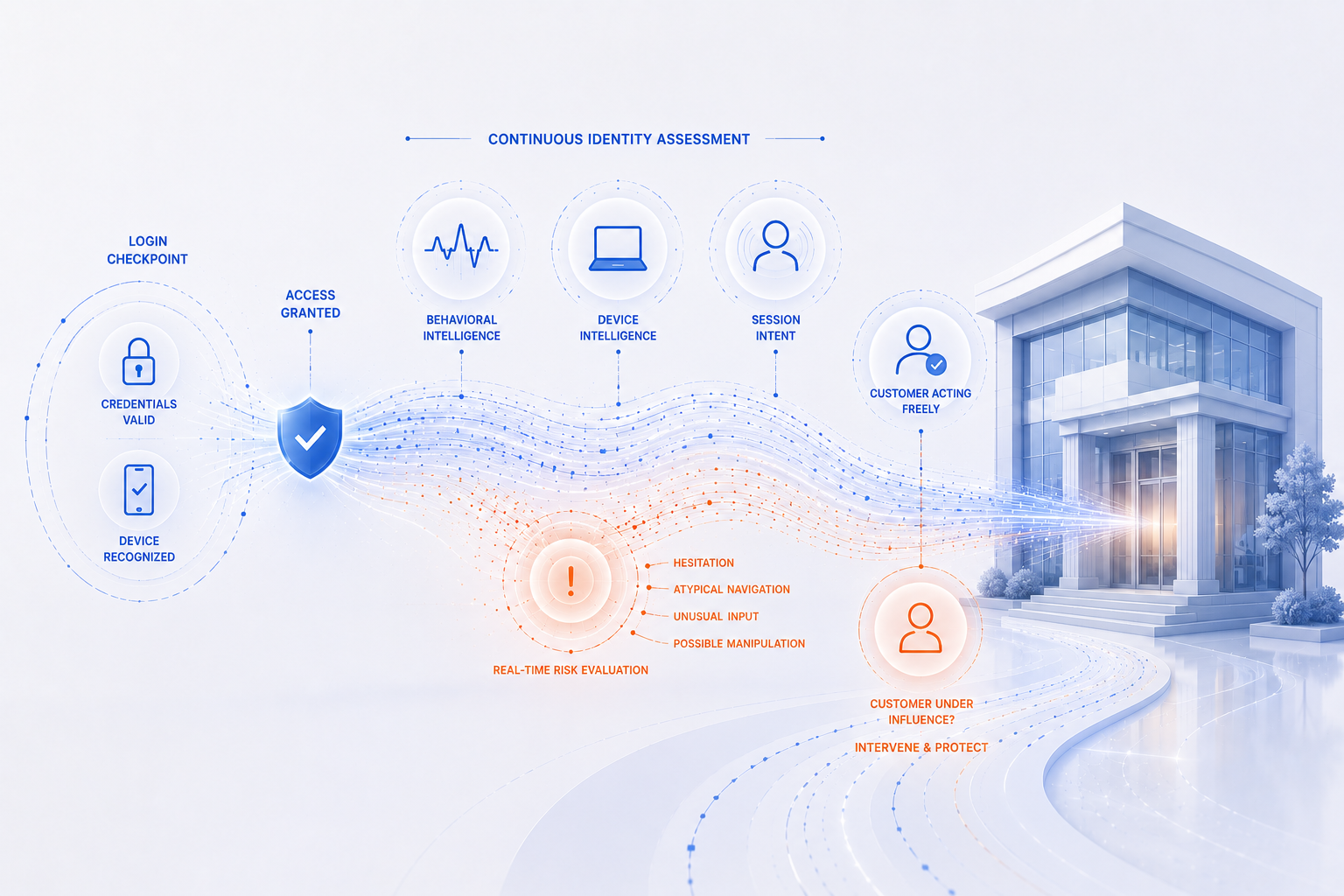
Respondents also identified and acknowledged that behavioral intelligence is and will be an essential tool for combatting future fraud typologies. Nine out of 10 fraud leaders recognize behavioral intelligence as a good source of data for their fraud stacks and are considering incorporating it.
What’s next?
The data we’ve obtained suggests German financial leaders are well aware of the problems they face and the greater challenges they’ll encounter in the future. However, reading between the lines, there are signs of hesitation and excessive caution with respect to change.
German banks should seize the opportunities the fast-moving fraud landscape presents to enact meaningful changes. Being proactive to get ahead of fraud perpetrators will facilitate the ongoing work of German financial institutions to better protect their customers. Given that banks are usually eager to get ahead of regulatory changes (71% of those surveyed said they are taking proactive action to amend policies in anticipation of new rules under PSD3/PSR, despite uncertainty about finer details), why do we not see the same proactivity applied to fraud prevention?
Key takeaways:
- Confidence in fraud controls may be overstated: While most German banking leaders rate their fraud defenses as effective, many also report rising fraud attempts, increasing losses, and significant financial impact, suggesting a gap between perception and reality.
- Manual processes continue to limit efficiency: More than half of institutions still rely heavily on manual reviews, and adoption of machine learning remains low, pointing to missed opportunities for improved detection and productivity.
- Modern fraud requires modern technology: Legacy fraud stacks are increasingly inadequate against evolving threats, yet only a small percentage of banks are actively implementing new technologies to address this gap.
- AI presents both risk and opportunity: Banking leaders recognize the potential of AI, including agentic AI, to reshape fraud, but may be overly confident in their readiness to handle emerging threats.
- Behavioral intelligence is gaining traction: Most fraud leaders view behavioral data as a critical component of future fraud prevention, signaling a shift toward more proactive and predictive approaches.
Resources:
- Cross-Border Investigative Alliance: German Banks Report Surge in Fraud Losses as Digital Payments Accelerate
- Report: 2025 digital banking fraud trends in Germany
- Blog: The value of precision in combating account takeover
- Blog: Is regulation doing more harm than good for German fraud practitioners?