
For two decades, the question was always the same: How do we verify who people are? The industry built layers to answer that question: multi-factor authentication, device fingerprinting, and (sometimes) behavioral analytics as a bolted-on afterthought. Each checkpoint became another moment a genuine customer had to prove they were who they said they were.
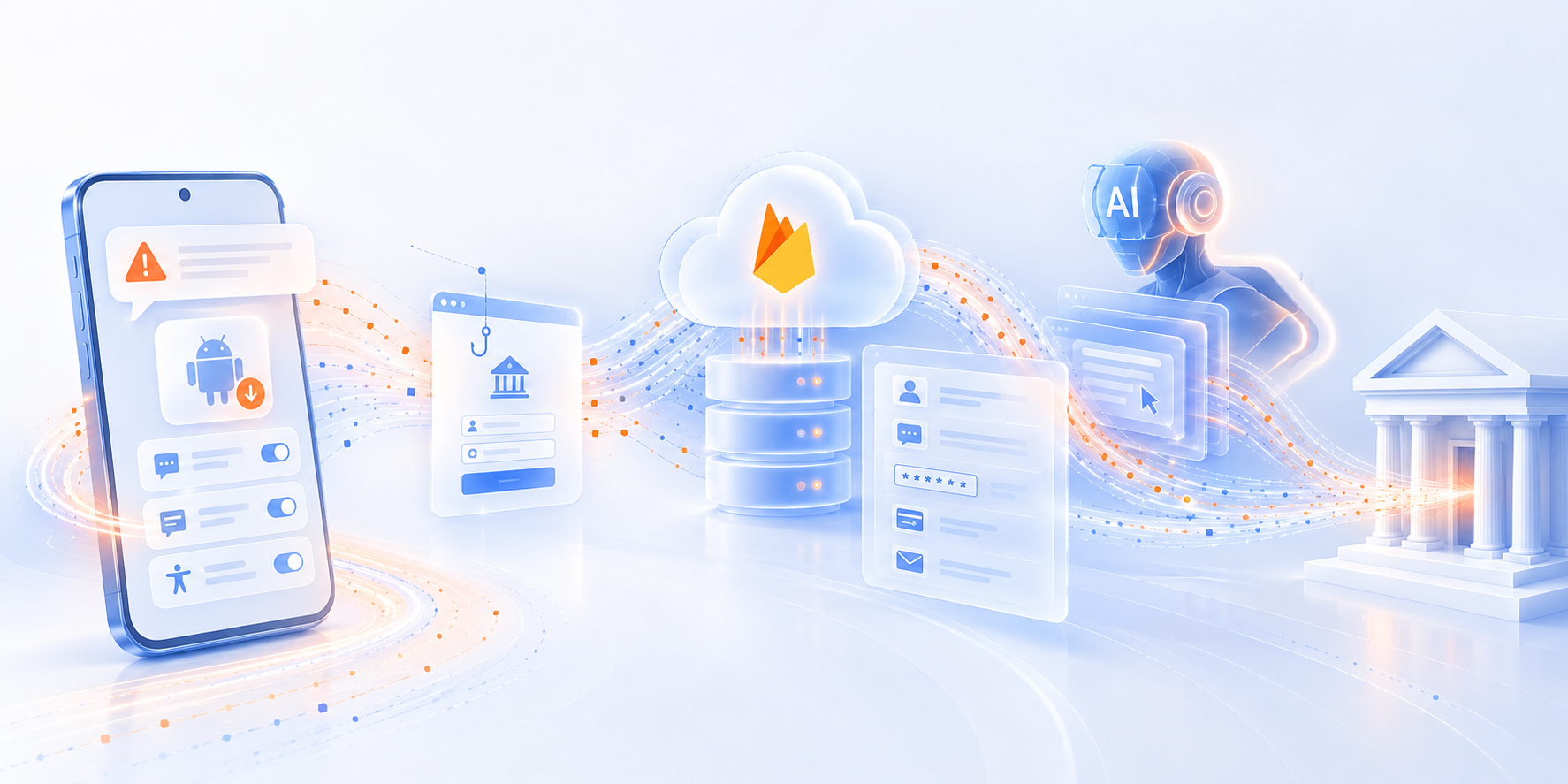
The industry got very good at identity verification, and criminals took notice. When banks hardened their perimeters, criminals stopped trying to break bank defenses and started trying to break the accountholders behind those walls. The rise of social engineering has changed the crucial question banks must answer from “who are you?” to “are you transacting under the influence of someone else?” Accurately determining the latter, and if the ‘who’ is even human at all, will define the next decade of growth and financial crime prevention in banking.
We call this the Recognition Economy.
From verifying identity to recognizing intent
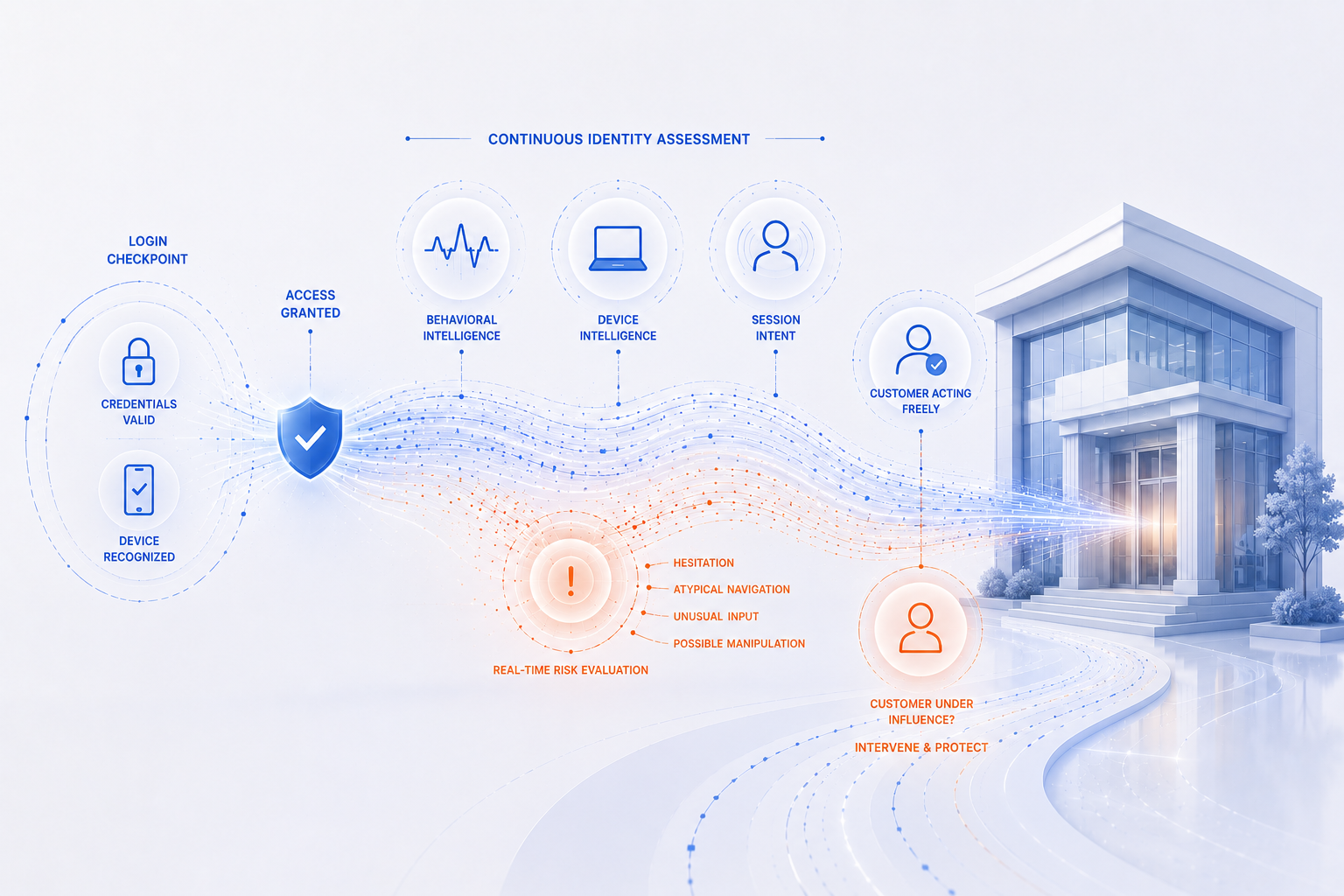
In the age before social engineering, a bank’s job was to verify a user’s identity at fixed checkpoints: login, account opening, and before authorizing a high-value transaction. Everything that followed inherited those few point-in-time judgments.
But when fraudsters started to focus their efforts as much on authorized push payment fraud as account takeovers, authentication at those fixed checkpoints became an ineffective way to stop fraud, while false positives remained as high as they always were.
The Recognition Economy is built on a fundamentally different premise: Banks must recognize user intent continuously and persistently, throughout every millisecond of every digital banking session. This goes beyond determining who is interacting with their platform and, crucially, also assesses whether that user is human or an agent acting under their own free will or under the direction or manipulation of someone nefarious.
Continuously analyzing user intent in real time requires behavioral intelligence, which recognizes and understands how users navigate, hesitate, and interact with screens and systems. Behavioral intelligence collects thousands of data points from every session, including typing cadence, navigation patterns, hesitation before an unfamiliar field, and the practiced efficiency of someone who has done this before. These signals are both invisible to every other control and the only reliable way to distinguish authentic customer intent from coercion. My colleague Sharell explained it well in a recent blog: What is behavioral intelligence?
Three competitive advantages of behavioral intelligence
The institutions stopping the most fraud, making the most meaningful reductions in customer attrition, and saving the most in operational expenses today all deploy behavioral intelligence, which gives them three critical competitive advantages:
- Growth: Precisely detecting fraud is a growth lever. It allows institutions to approve more genuine customers, place less friction on established relationships, and detect risk earlier. When banks clearly recognize intent, they approve with confidence, compressing the time to account activation, accelerating primary relationship conversion, and turning customer acquisition into lasting value.
- Identity architecture: Static authentication is dead. The next generation of identity systems evaluate trust continuously, throughout the session, adapting in real time as the interaction unfolds. This shift from identity to intent enables banks to deploy stronger controls without placing more friction on genuine accountholders.
- Financial crime risk: Fraud, cybersecurity, and AML are no longer separate problems. They’ve fused into an interconnected criminal ecosystem, running through the same channels, exploiting the same gaps. Behavioral intelligence enables coordination across teams that have been working in silos, providing financial institutions a shared source of truth that turns reactive detection into proactive intervention.
What changes when you get this right?
The institutions that have deployed behavioral intelligence at scale are measuring outcomes that should make every bank leader sit up and pay attention:
- 72.9% fraud detection rates (versus 58–65% for fragmented stacks)
- 15x ROI over five years
- Millions in revenue recovered per institution through approval rate recovery alone
That last one seems especially important. That reclaimed revenue represents genuine customers whom legacy fraud solutions commonly declined.
Why now?
We’re seeing the convergence of three powerful forces.
- The threat landscape has fundamentally shifted. Attacks are happening inside legitimate sessions, real-time payments have compressed the window for intervention to seconds, and artificial intelligence has enabled the scaling of both criminal attacks and bank defenses.
- At the same time, customer expectations have hardened. Digital applicants expect instant access, and established customers expect frictionless experience. The gap between what customers demand and what fragmented fraud stacks can safely deliver is widening every quarter.
- The institutions that resolve this tension, striking that precise balance between protection and user experience, will capture market share from those that can't.
According to IDC’s Worldwide Banking Enterprise Risk Management and Compliance Technology Trends, 2026, 74% of banking institutions cite financial crime as their single most significant risk concern, outranking credit risk and cybersecurity. Yet IDC’s analysis identifies a critical gap: Most institutions operate with fragmented signal architectures that address transactional patterns, credentials, and device history, but lack the behavioral intelligence layer that is simultaneously hardest for AI-driven fraud to replicate and most relevant to detecting coercion and scams.
That gap is the structural problem the Recognition Economy addresses. While IDC’s research framework identifies six signal layers required for recognition-grade detection, institutions don’t need to be equally sophisticated in all six. They need to be exceptionally sophisticated in the layer that matters most: The one that captures intent.
That’s what behavioral intelligence does and why it should be at the core of fraud- and financial-crime-prevention architecture.
—
Key takeaways:
- Banks must shift their focus from identity verification to detecting whether customers are acting under coercion or manipulation.
- Continuous behavioral analysis throughout a banking session — not just at login or account opening — is the only reliable way to distinguish authentic customer intent from social engineering and agentic attacks.
- Institutions deploying behavioral intelligence gain competitive advantages across three areas: accelerating customer approval and growth, evolving identity systems from static to adaptive, and unifying previously siloed financial crime, cybersecurity, and AML teams.
- Banks using behavioral intelligence at scale achieve 72.9% fraud detection rates, generate 15x ROI over five years, and recover millions per institution in revenue from declined genuine customers.
- Three simultaneous pressures make the shift urgent: criminals exploiting legitimate sessions in real time, customers demanding instant and frictionless access, and a massive market opportunity for institutions that deliver both protection and experience.
Resources:
- Blog: What is behavioral intelligence?
- IDC: Worldwide Banking Enterprise Risk Management and Compliance Technology Trends, 2026