
Many financial institutions today maintain a deposit scorecard that measures the wrong outcome. These banks tally and tout their quantity of newly opened accounts but not the quality of their institution’s relationships with new accountholders.
The American Bankers Association estimates consumers open an average of 140-160 million new accounts at U.S. banks alone every year. A PYMNTS and Finicity survey of U.S. consumers finds more than 10% of those newly opened accounts remain unfunded at the time of opening.
Accounts funded slowly or not at all often go dormant and are more likely to be purpose-built for money laundering. Imprecisely applying friction to account opening processes to block these mules and unused accounts from ever being opened inevitably dissuades legitimate users from completing their new account applications, denying the bank some substantial number of genuine, fully funded accounts.
In this dilemma between stopping mules (and the scams and organized criminal syndicates they serve) and allowing legitimate customers to seamlessly apply for a new account in minutes, fund it on the same day, and then transact before a card arrives there exists an opportunity.
The four moments where relationships are built or lost
Four distinct moments in the customer lifecycle determine a bank’s deposit performance. Each combines a growth opportunity with some risk exposure. Each is invisible to controls built around what people submit instead of how they interact.
- At account opening: Two applications submit identical data. One passes. One fails. Why? Because the one that fails has behavioral signatures — timing patterns, keystroke cadence, navigation sequences, etc. — that don't match human cognition. Bots move at machine speed. Genuine applicants hesitate at unfamiliar fields, scroll through terms, navigate away to find a promo code. That variability is the difference between a streamlined onboarding and one that defaults to friction. Without visibility into user behavior, institutions apply controls broadly, and the people most burdened are the genuine customers who were never the target. That legitimate applicant who abandons a frustrating form is unlikely to return.
- During initial funding: Accounts that fund immediately activate faster and are far more likely to evolve into primary banking relationships. Friction here not only delays the transaction but also often ends the bank’s relationship with the accountholder before it generates any value. A genuine first-time depositor has a different behavioral profile than an account being opened for layering purposes.
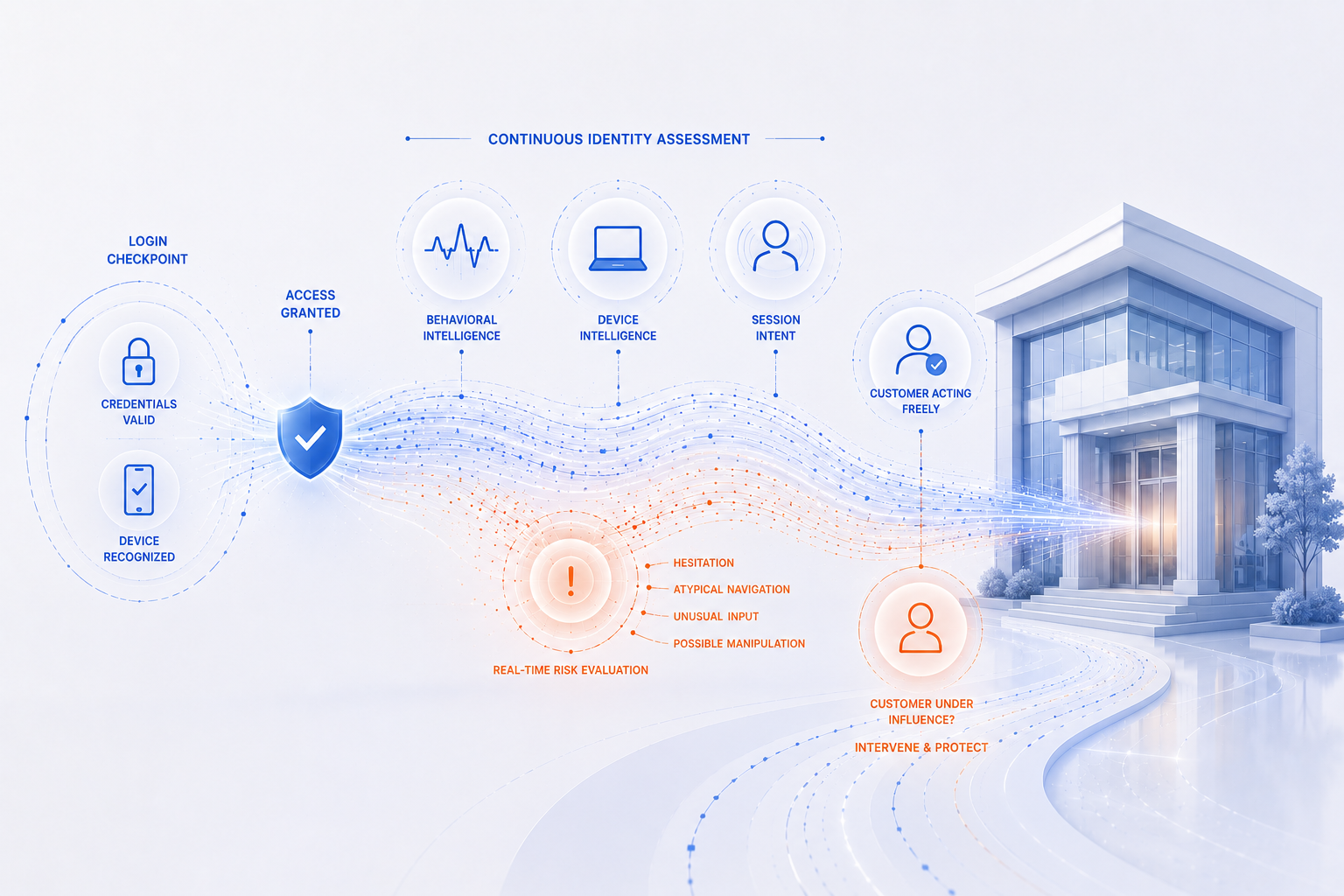
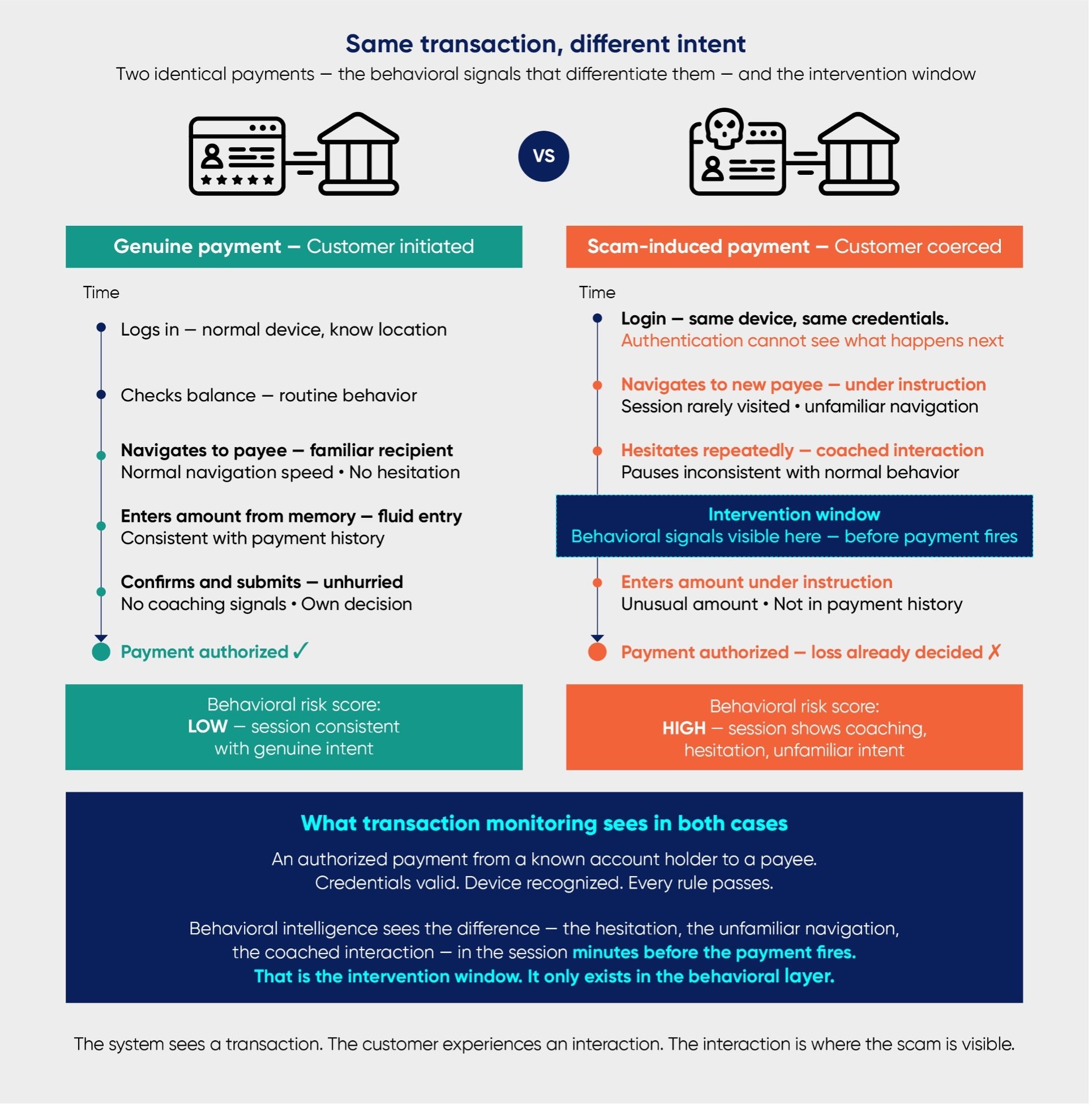
- In everyday usage: This is both where relationships between financial institutions and accountholders are won and lost and where authorized push payment scams operate. The payment is authorized, credentials are valid, and every control recognizes the session as legitimate, but a scammer is walking the accountholder through every step of the transactions. Behavioral intelligence can recognize the signs of that manipulation before any money moves: A customer under the instruction of someone else often hesitates unusually, navigates to unfamiliar screens, and enters atypical payment amounts.
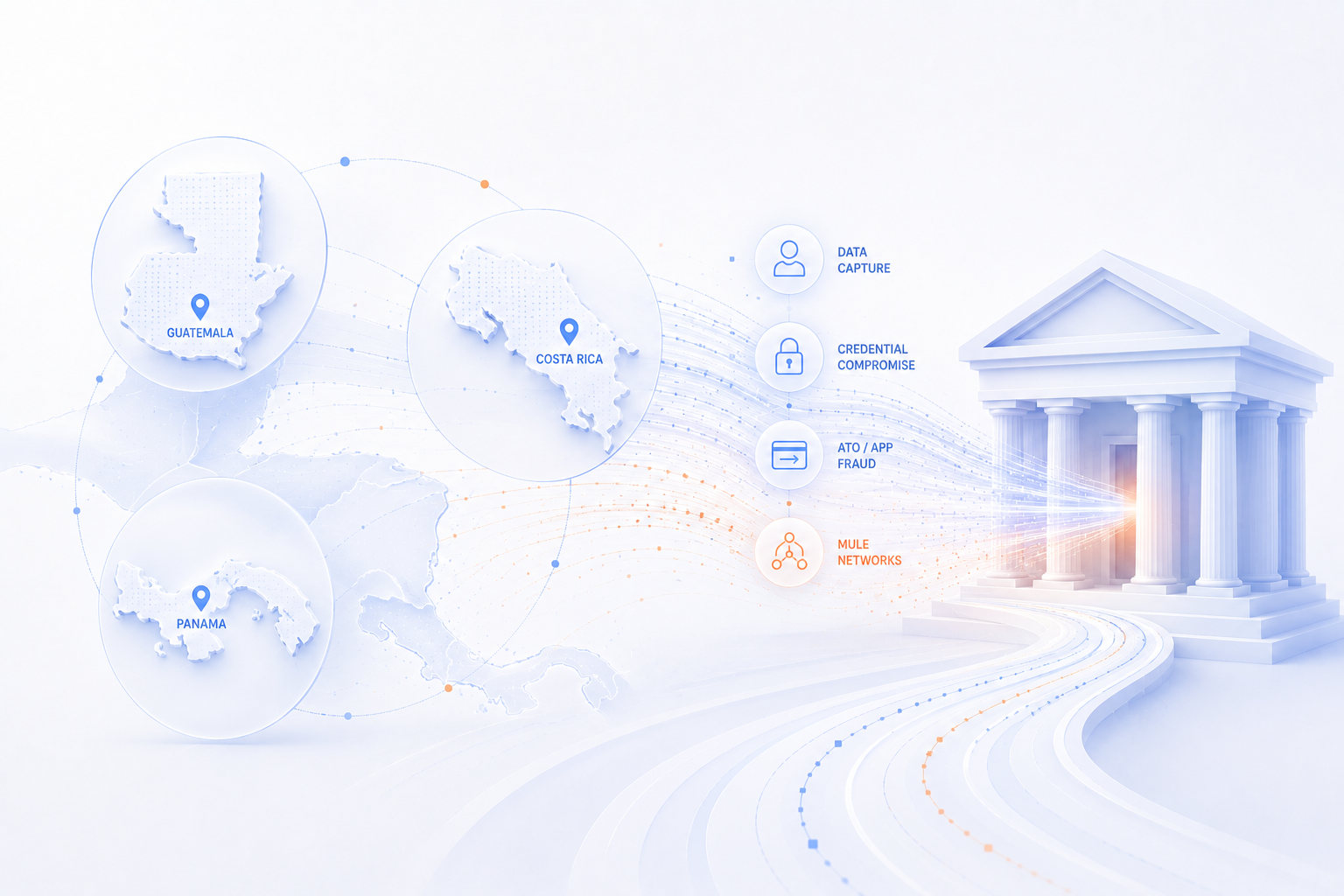
- In mule activity: By the time your AML team flags a mule account, the funds are gone and it’s time to file a SAR. But clues that an account was either opened, rented, or acquired for money laundering exist much earlier in the laundering process. Multiple, unrelated new account applications originating from a single device, session patterns suggesting the account is operated by someone other than the person who opened it, practiced navigation that contrasts sharply with earlier exploratory sessions all suggest the account might be a mule. When National Australia Bank (NAB) mapped behavioral signals across its organization, it found 16 to 17 internal teams touching mule accounts at different stages. That fragmentation is why these accounts go undetected for so long. Using BioCatch’s behavioral intelligence, NAB identified 10,000 likely mule accounts, only 70 of which were later confirmed as genuine — a mule-detection accuracy rate of better than 99%.
A revenue opportunity
Deposit product owners must ask themselves: Where are genuine applicants being declined because my institution lacks confidence rather than because these accounts represent real risk? What is the dollar value of that approval rate gap? Where is everyday friction eroding engagement in ways that never get attributed to revenue loss but very much are?
More genuine customers approved means greater acquisition. Less friction on established customers means higher retention. Earlier detection of bad accounts means a cleaner portfolio and lower costs.
After deploying behavioral intelligence to its account opening journeys, one large Canadian bank saved an estimated $7.7 million in projected new account fraud and reduced manual reviews by 67%.
A smaller challenger bank rejected 1,500 fewer applications in a single year, saving more than $1 million in fraudulent applications and adding $3 million in revenue from unnecessary account rejections.
Wells Fargo added 1.5 million mobile banking customers in a single year. More than 40% of those new accounts were opened digitally, and none compromised portfolio quality. Mule accounts declined more quickly, and primary relationship conversion improved.
Better recognition via precisely applied friction means both fewer genuine customers declined and fewer bad accounts approved.
What gets measured gets managed, what gets attributed gets funded
Fraud teams prevent losses. Risk teams identify bad accounts. But the profit-and-loss pressure — the accounts that never fund, the relationships that never activate, the engagement that erodes under unnecessary friction — often eludes executive attention.
Making that cost visible allows us to build the business case for behavioral intelligence, putting real numbers on the genuine applicants facing unnecessary friction, the engagement lost, and the relationships stalled before they started. In many institutions we’ve worked with, that dollar figure rivals or even exceeds the value of the fraud prevented.
When applied precisely, friction is a growth lever and not a growth inhibitor.
—
Key takeaways:
- Behavioral intelligence helps banks distinguish genuine customers from risky applicants, reducing unnecessary friction while keeping bad accounts out.
- The moments that matter most for deposit growth extend beyond account opening to initial funding, everyday usage, and potential mule activity.
- Behavioral signals can identify risk that traditional controls miss, including automated applications, scam manipulation, and early signs of mule activity.
- Precisely applied friction can improve acquisition and retention by allowing more genuine customers to open, fund, and use accounts without unnecessary obstacles.
- Banks can build a stronger business case for behavioral intelligence by measuring the revenue lost to false declines, abandoned applications, delayed funding, and unnecessary friction.
Resources:
- Case study: Top-five Canadian bank stops bad applicants and realizes more than $8 million in fraud and operational savings
- Case study: How a top challenger bank prevented more than $1 million in new account fraud and increased customer acquisition
- Blog: The value of precision in account opening
- Blog: The value of precision in combating account takeover
- Blog: The value of precision in stopping scams
- Blog: The value of precision in disrupting mule networks
- Blog: The value of precision in device intelligence
- Blog: The hidden value of friction
- Blog: The Recognition Economy: A new framework for how banks will compete
- PYMNTS and Finicity: Account opening and loan servicing in the digital environment
- American Bankers Association: Letter to FinCEN on the CIP PRA Renewal