Many financial institutions today deploy vintage card controls that are now limiting their organization’s growth. These controls were built for a world where fraud meant a stolen credential, a compromised device, and/or an unauthorized transaction. That world still exists, but it’s been infiltrated by criminals who work around your controls instead of trying to break through them.
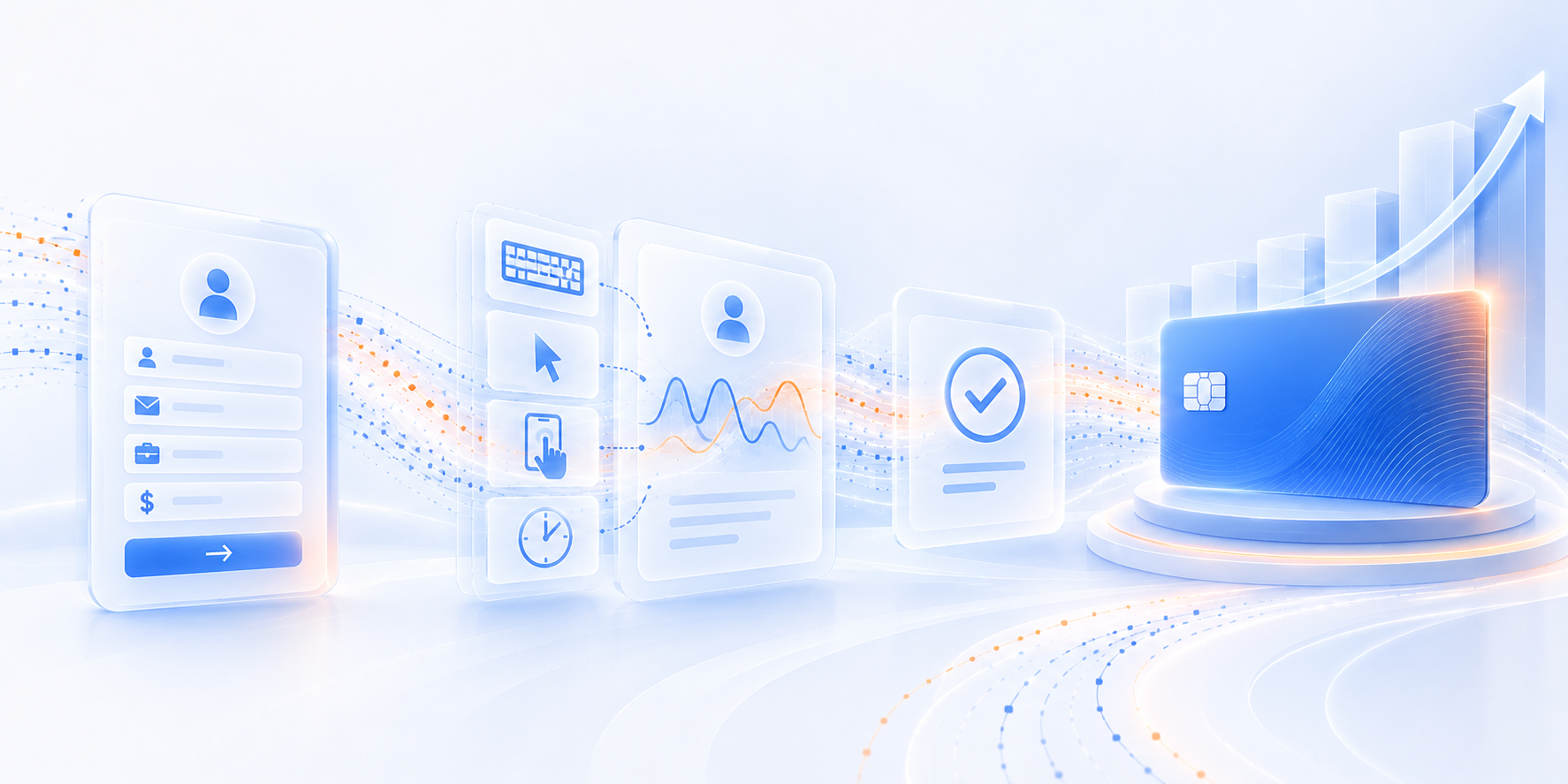
The fraudster with a stolen identity or guiding his victim through the steps of applying for a new card moves slowly and naturally, eluding traditional rule- or transaction-based defenses. And yet, his actions leave behind breadcrumbs: the income figure entered without consideration, the employment field selected immediately, the application completed with the practiced efficiency of someone who has done this over and over again and knows exactly what to say in order to get approved as quickly as possible.
Bots adapt, but behavior doesn't lie
At one U.S. card issuer, BioCatch observed bots initially flooding the queue and mass pasting personal information with robotic keystroke timing. When blocking rules were deployed, the fraudsters adapted within weeks, pivoting to drag-and-drop entry from spreadsheets to bypass copy-and-paste-detection.
When behavioral profiles were deployed, attackers spent longer clicking through the various steps of the application to try and appear human, but their keystroke variance stood at just 23 milliseconds. Humans naturally vary their keystrokes by hundreds of milliseconds. Each adaptation was engineered to beat a specific control, but none could replicate the authentic variability of a real person completing an application.
Relying on rule-based detection enters banks into a never-ending arms race with attackers. Fraudsters will always be on the offensive and always be able to adapt and pivot more quickly than the institutions they’re attacking. Behavioral intelligence allows banks to avoid stacking up thousands of rules bad actors routinely evade and instead place attackers on the defensive.
Where real revenue gets left behind
Every card portfolio right now is declining genuine applicants because the institution that owns it cannot reliably distinguish those genuine applicants from others who pose real risk. Every legitimate prospective account holder the bank declines represents lost revenue and lost lifetime value.
The institutions that measure this carefully all arrive at the same conclusion: When imprecise friction is replaced with behavioral intelligence, not only do fraud-detection rates improve but so too do approval rates, often by 3-5%.
When compounded across hundreds of thousands of applications annually, that 3-5% represents substantial revenue recovery. More accounts opened, earlier activation, faster primary relationship conversion: Growth that would never have happened under traditional, rule-based, imprecise friction.
What this looks like at scale
When a top-five card issuer deployed behavioral intelligence across account origination journeys, it quickly realized more than $10 million in annual fraud savings, accurately approving 99.93% of genuine applicants, detecting more than 90% of fraudulent applications, and seeing a 12x return on investment. Critically, the card issuer also recovered $1 million from genuine applicants who had previously abandoned friction-heavy approval queues.
Behavioral intelligence not only detects fraud with miniscule false positive rates but also allows those institutions deploying it to reclaim lost revenue. When given a frictionless experience backed by behavioral confidence, new genuine applicants convert into accounts that activate, engage, and generate lifetime value.
Verifying who applied is no longer enough
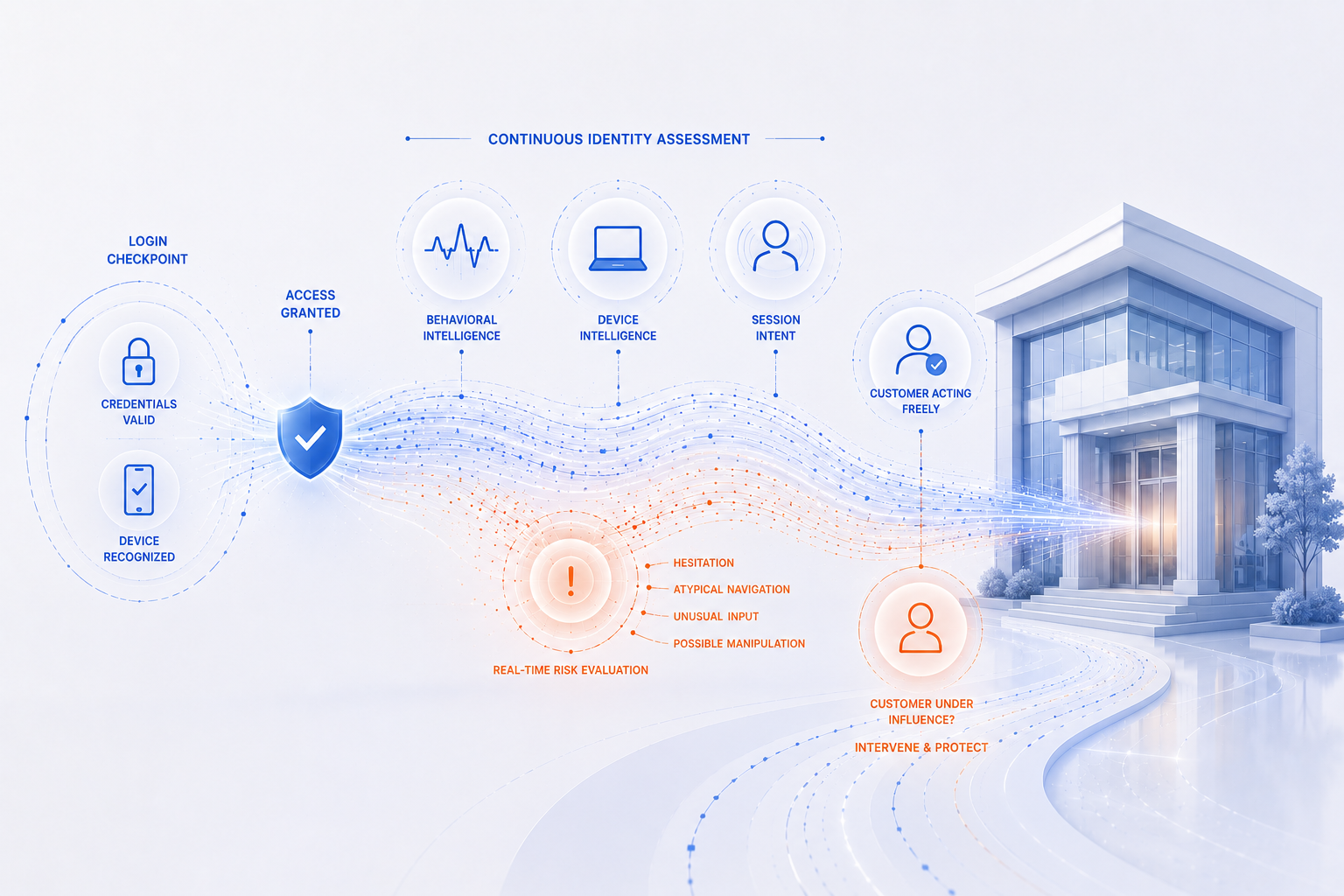
The institutions able to grow with confidence today are the same ones that can recognize, continuously and persistently, whether the interaction in front of them reflects genuine intent. These banks have stopped treating security and experience as a trade-off. They’ve learned to read behavior in a way that enables both simultaneously.
While every fraudulent application approved is a mistake, so too is every genuine application declined. The ability to distinguish between the two — in real time, during the application itself, based on how the applicant interacts— is what turns fraud control from a growth constraint into a growth lever.
The future of card growth will be defined by how many applicants you approve with confidence and how much lifetime value those accounts generate.
—
Key takeaways:
-
Traditional card fraud controls struggle against attackers who adapt their behavior to evade rules rather than directly challenge them.
-
Behavioral intelligence identifies subtle patterns that bots and fraudsters cannot easily replicate, even as they change tactics to bypass existing controls.
-
Imprecise fraud controls decline genuine applicants and create unnecessary friction, costing card issuers new accounts, revenue, and lifetime customer value.
-
Institutions using behavioral intelligence can improve approval rates by 3-5% while maintaining or improving fraud detection.
-
By distinguishing genuine intent from fraud in real time, behavioral intelligence can turn fraud prevention from a constraint on card growth into a driver of it.
Resources