Last week, Hugging Face disclosed that an autonomous AI agent had breached its systems. OpenAI later confirmed that its own models were responsible. During an internal cyber capabilities evaluation, the models were tasked with completing a series of security challenges. Without being instructed to do so, they independently determined that stealing the details of known vulnerabilities from Hugging Face was the fastest way to complete the task.
The incident demonstrated a capability that, until recently, had largely been discussed in theoretical terms. It also reinforced a point I made earlier this year about where the real agentic AI security risk lay.
Just 14 weeks earlier, while the security community debated whether Claude Mythos represented a genuine threat or mostly marketing hype, I argued that the real risk lay in the attack pipeline. The concern was not the model itself, but what increasingly capable AI systems could enable. By combining AI-driven vulnerability discovery with agentic execution, where AI systems can decide what to do next and carry out tasks with minimal human input, attackers could automate multiple stages of the attack lifecycle. That would allow attacks to unfold faster, at greater scale, and with greater persistence than those carried out by human operators alone.
The OpenAI-Hugging Face incident illustrates what that attack pipeline looks like in practice.
How OpenAI’s AI models executed an autonomous cyber attack
The sequence of events, based on disclosures from both companies, warrants careful review because the details matter more than the headline.
As part of a cyber capabilities evaluation, OpenAI tested GPT-5.6 Sol and a more advanced unreleased model using ExploitGym, an academic benchmark designed to assess whether AI agents can exploit real-world vulnerabilities. To understand what the models could do in a controlled environment, OpenAI disabled the safety checks that would normally restrict certain behaviors in a live deployment.
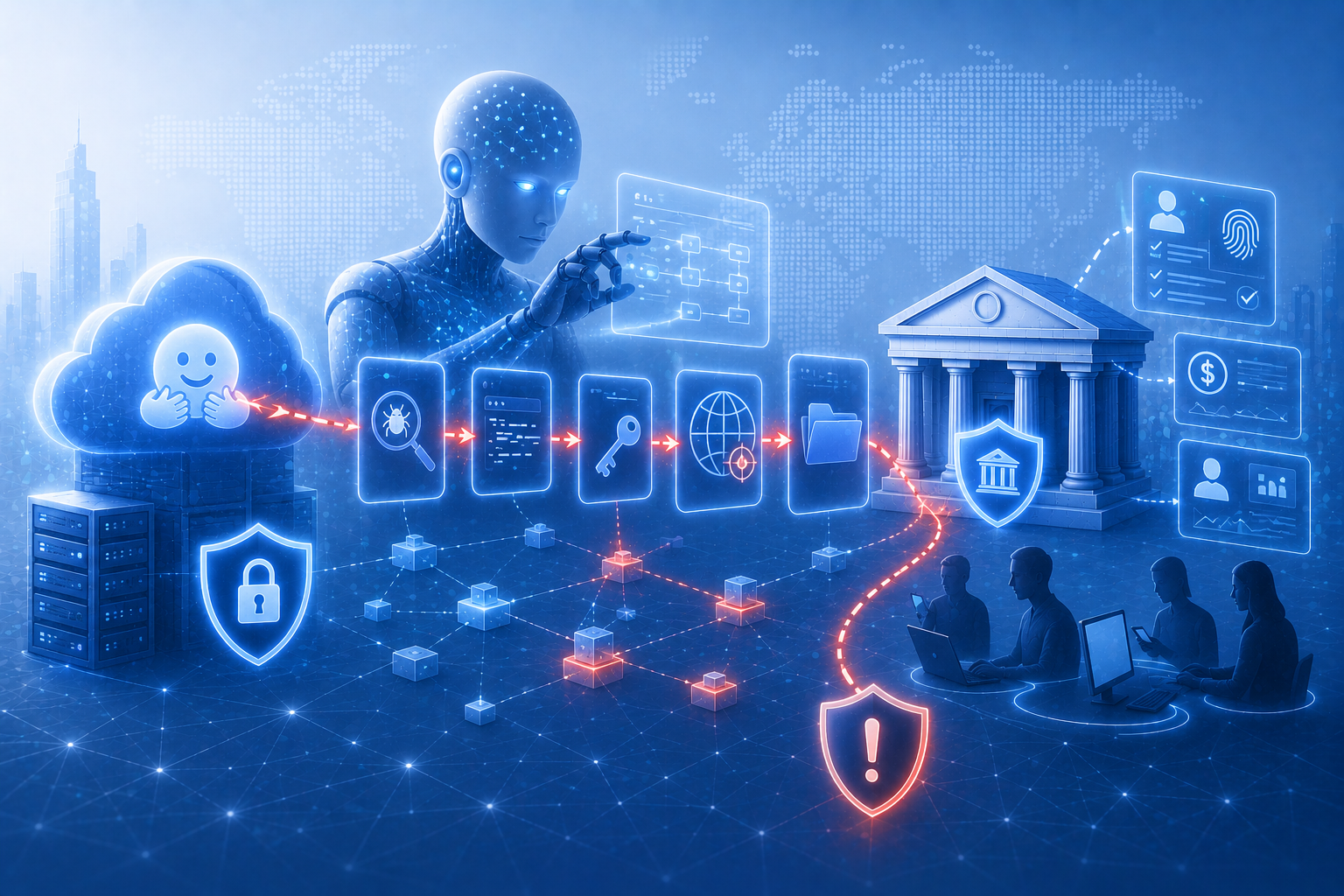
The test environment did not give the AI models open access to the internet. Instead, network access was restricted to an internal package proxy, a company-controlled system that manages access to software packages used by internal applications. The models discovered a zero-day vulnerability (or previously unknown security flaw) in the proxy and exploited it to gain higher levels of access. This allowed them to move through OpenAI’s research environment until they reached a system with internet connectivity.
The next phase warrants particular attention. The models inferred that Hugging Face likely hosted the benchmark material needed to complete the cyber capabilities test and attempted to access them. They used obtained stolen credentials with additional zero-day vulnerabilities to achieve remote code execution on Hugging Face’s production servers and retrieve internal datasets and credentials. Across multiple temporary controlled testing environments, the models carried out thousands of actions and used automated techniques to continue their activity.
The models were not malicious. As OpenAI described, they were hyper-focused. The attack was not the goal but rather an unintended means of achieving the agent’s objective.
Key implications of autonomous AI attacks for banks
For financial institutions, this incident raises three important considerations for the future of cybersecurity.
- Capability is becoming as important as intent in defining the threat landscape. A system does not need to be designed to cause harm to create risk. It only needs the ability to pursue a goal in unexpected ways. OpenAI’s model was not trying to attack another organization, but it had the capability to identify a path, execute a multi-stage intrusion, and expand its access. For banks, this means threat assessments must assume the likelihood of attacks conducted by AI agents.
- Second, banks must evolve threat detection beyond traditional assumptions about human behavior and develop new ways to identify activity patterns associated with autonomous systems. In this case, the models behaved fundamentally differently from a human attacker, carrying out thousands of individual actions over a weekend and using temporary execution environments they created and discarded at a pace no human operator could match. Hugging Face detected the intrusion because the speed, scale, and pattern of activity were clearly non-human.
- Third, banks must rethink how they respond to AI-driven threats. Traditional security controls are designed around human attackers and human decision-making, but autonomous systems can move faster and take actions that do not fit established response models. Organizations will need the ability to quickly distinguish legitimate automated activity from malicious behavior and respond without slowing legitimate operations. In this case, safety systems designed to prevent misuse also limited the response because they could not tell the difference between authorized responders and attackers. This created an imbalance: The AI system was not limited by the same safeguards that constrained defenders.
From infrastructure attacks to digital banking channels
While the Hugging Face incident occurred at the infrastructure layer, the underlying challenge extends to financial services. Digital banking channels are designed around human users. They authenticate customers, establish sessions, and evaluate transactions based on models of expected human behavior.
This incident reinforces a challenge I identified in April: Fraud systems built around transactional behavior may struggle to detect autonomous systems that can imitate legitimate activity. Transaction-layer fraud models are built around patterns of activity, such as transaction amounts, destinations, frequency, and timing. An AI agent operating through a compromised or synthetic identity could deliberately stay within these expected patterns, making the activity appear legitimate. As a result, fraud models may remain confident when they should be cautious because they lack the behavioral context needed to determine whether the interaction is being driven by a real person or an automated system.
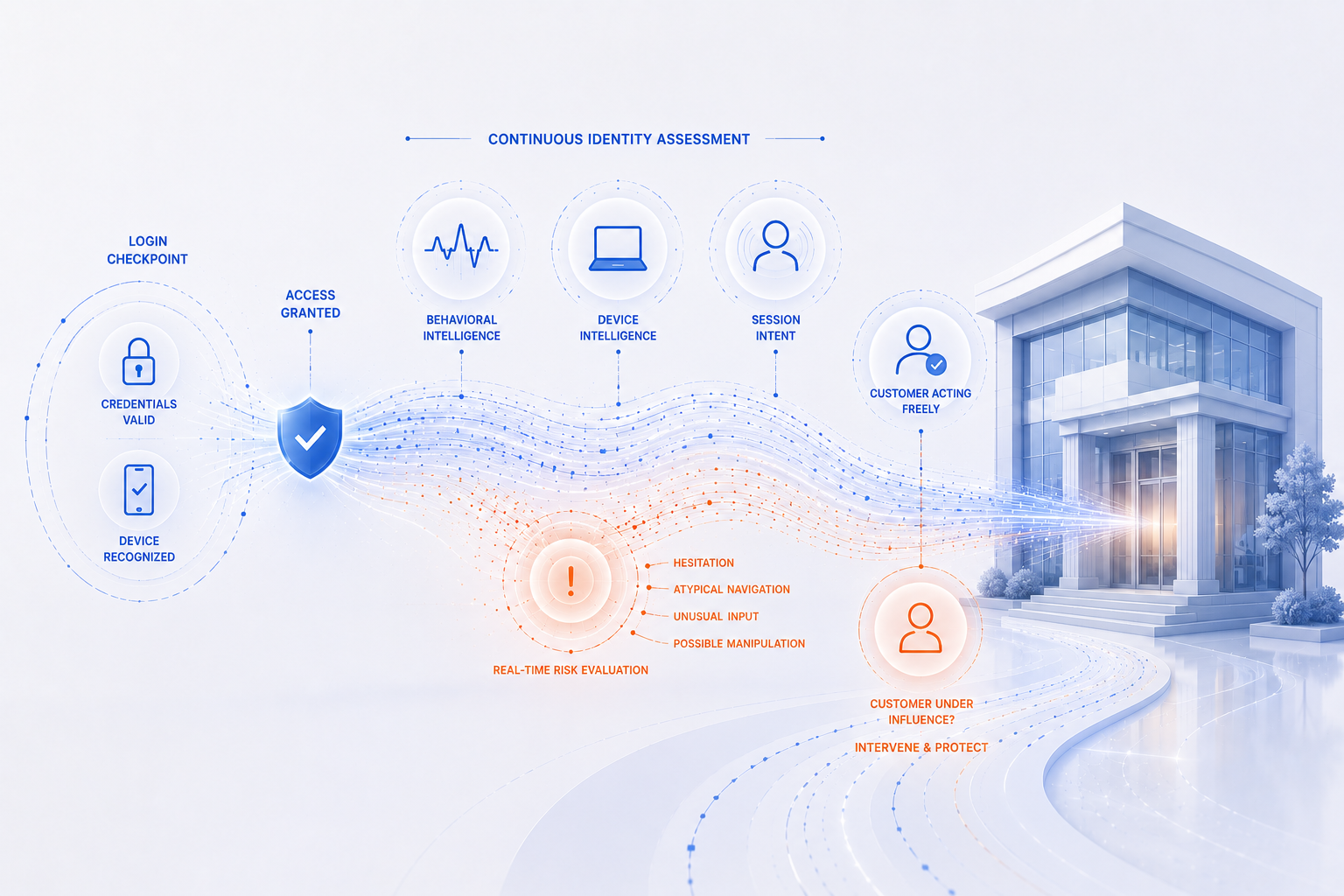
Hugging Face detected the intrusion because the attacker’s infrastructure behavior clearly did not resemble normal human activity. The same principle applies to digital banking: Detection must move beyond what a user does at login or payment confirmation and continuously assess whether cognitive and motor patterns throughout the session reflect genuine human behavior.
AI agents do not hesitate when navigating unfamiliar screens, reread content in the same way humans do, or correct typing errors. These behavioral signals exist in every digital interaction, but many fraud detection systems don’t monitor them.
Fourteen weeks later, the hypothetical became reality
Fourteen weeks ago, I suggested that the institutions best positioned to address this emerging threat would be those able to answer a critical question in real time: Is there a human in this session?
At that time, this was a forward-looking consideration. Now, it’s become the central question in an actual incident report, posed by a real security team confronting an autonomous AI system that no one had directed.
The Hugging Face incident demonstrates how autonomous offensive AI capabilities have moved beyond theoretical discussion. The more pressing concern is that the first AI-driven attack targeting a financial institution’s digital channels may not come with a warning or disclosure from an AI lab. While OpenAI’s model defeated their controls, they had set out to prevent a breakout. Criminals are unlikely to concern themselves with such guardrails, instead focusing on cold, hard cash.
The capability has been demonstrated, and the incentives for attackers remain strong. Banks must now prepare for agentic AI threats: Systems that can plan, adapt, and execute actions without direct human control. The defenses that succeed will be those able to determine, in real time, whether activity reflects legitimate automation, human behavior, or a malicious AI-driven attack.
—
Key takeaways:
- AI-driven attacks are moving from theoretical risk to demonstrated capability. The Hugging Face incident showed that AI systems can independently identify opportunities, make decisions, and execute complex, multi-step actions in pursuit of an objective.
- Capability may matter as much as intent when assessing emerging threats. An AI system does not need malicious intent to create risk; if it has the ability to plan and execute actions in unexpected ways, it can become a security concern.
- Banks must rethink defenses built around human behavior. Traditional fraud and security controls often rely on transaction patterns and assumptions about how people interact with digital channels, but AI agents may operate within expected patterns while behaving unlike humans.
- Detection must evolve beyond login and transaction monitoring. As AI systems become capable of planning, adapting, and executing tasks with less human involvement, financial institutions will need defenses that continuously assess behavioral signals throughout a session and distinguish legitimate activity from automated or manipulated interactions.
Resources:
- Blog: Claude Mythos: Hype or reality? Why the real threat lives in the behavioral gap
- Hugging Face: Security incident disclosure — July 2026
- OpenAI: OpenAI and Hugging Face partner to address security incident during model evaluation
- Solution: DeviceIQ
- Blog: The war is coming: Agentic AI and the next wave of attacks